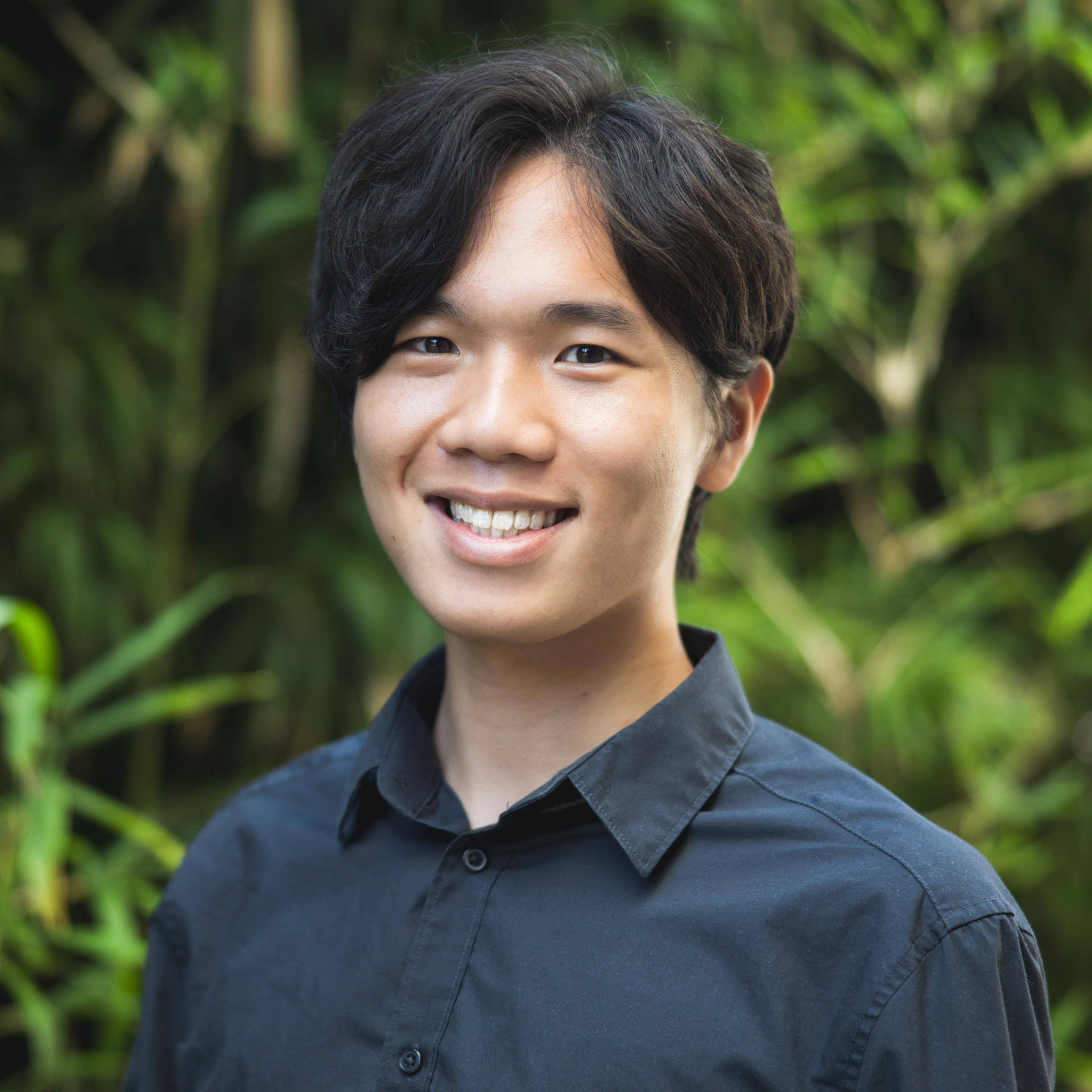
小野 隆一
Ryuichi Ono
カリフォルニア大学バークレー校 比較生化学専攻 博士課程2年
PhD Student (2nd year), Comparative Biochemistry, UC Berkeley
email: ryuichi@berkeley.edu
X: @rono0117
Interests
現存する全ての生命の多様性を可能な限り表した図、"Tree of Life"を見るたび、細菌の多様さに驚かされずにはいられません。生命の多様性の大半は、細菌の多様性によるものだとすら思えます。大腸菌と乳酸菌がどれくらい異なるかに比べれば、人間もバナナもよく似たものかもしれません。
細菌はどうしてこんなに多様なのでしょうか。進化を駆動する突然変異は偶然に起きるので、増殖の速い細菌は、その分だけ突然変異=進化のチャンスが多い、という説明はすごく妥当だし、納得感があります。しかし、それが全てでしょうか。
細菌は、自身のDNAに自ら変異を導入したり、外来遺伝子を取り込み、時には自分の染色体へ組み込んだりして、積極的に進化を引き起こすメカニズムを備えています。このようなメカニズムの起源や仕組みについて考えることは、「進化はどう進化してきたのか」と問うことと似ています。私は、比較ゲノムを中心とするバイオインフォマティクスと、wet実験での検証を通して、この問いにアプローチしたいと考えています。
Every time I look at a diagram representing all the diversity of life on Earth—the "Tree of Life"—I am struck by the sheer diversity of bacteria. It almost seems that most of life's diversity is bacterial diversity. Compared to how different E. coli and lactic acid bacteria are from each other, humans and bananas might as well be almost the same.
Why are bacteria so diverse? Since mutations that drive evolution occur randomly, the fast-reproducing bacteria have more opportunities for mutations—and therefore evolution. This explanation is quite reasonable and intuitive. But is that the whole story?
Bacteria have mechanisms to actively introduce mutations into their own DNA, take up foreign genes, and sometimes integrate them into their chromosomes—actively driving their own evolution. Thinking about the origins and mechanisms of these processes is akin to asking, "How did evolution itself evolve?" I aim to approach this question through comparative genomics and bioinformatics, validated by wet-lab experiments.
Education
- 2024 – カリフォルニア大学バークレー校 Comparative Biochemistry Program University of California, Berkeley — Comparative Biochemistry Program
- 2020 – 2024 東京大学 理学部 生物情報科学科 The University of Tokyo — Dept. of Bioinformatics and Systems Biology, B.S.
- – 2019 三重県立津高等学校 Mie Prefectural Tsu High School
Publications
Host range and ARG dissemination are shaped by distinct survival strategies of conjugative plasmids
bioRxiv (2025)
View Paper →†Corresponding author